
Quick answer: The Buddhist Circuit is a pilgrimage route linking Lumbini (birth), Bodh Gaya (enlightenment), Sarnath (first sermon) and Kushinagar (Mahaparinirvana), along with Rajgir, Nalanda, Vaishali, Shravasti and Sankisa. A full circuit takes 8–14 days by road, is best travelled by private car or tempo traveller, and typically starts and ends in Delhi or Varanasi.
A Buddhist Circuit tour is a meaningful journey through the places connected to the birth, enlightenment, teachings, and Mahaparinirvana of Gautama Buddha. This India and Nepal Buddhist pilgrimage route is ideal for Buddhist devotees, spiritual travelers, history enthusiasts, and anyone seeking a slower, more reflective kind of travel.
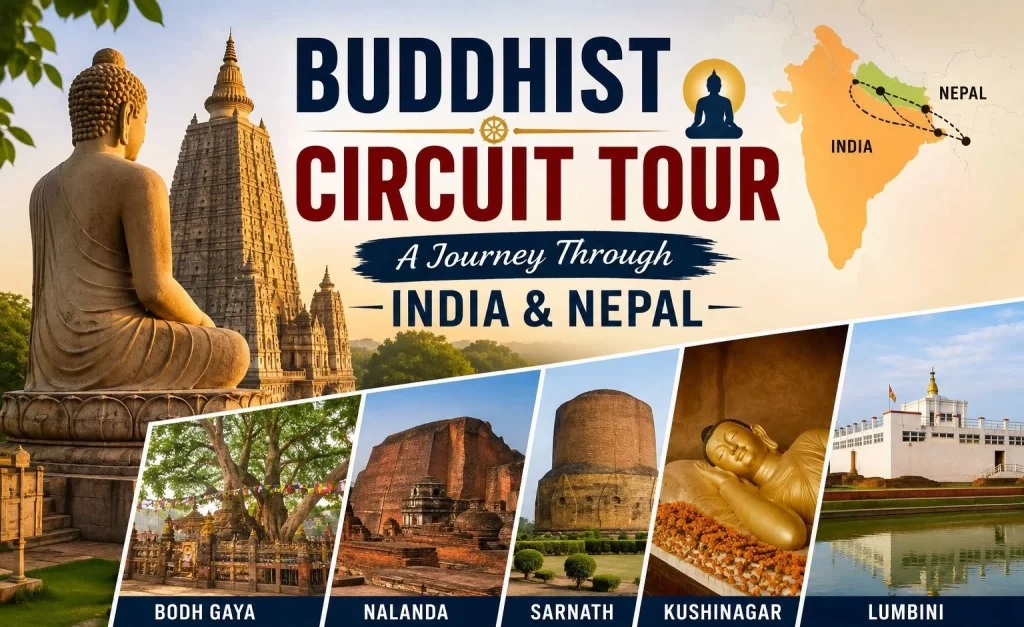
The four most important Buddhist pilgrimage sites are Lumbini, where Buddha was born; Bodh Gaya, where he attained enlightenment; Sarnath, where he delivered his first sermon; and Kushinagar, where he attained Mahaparinirvana. A longer Buddhist Circuit tour package can also include Rajgir, Nalanda, Vaishali, Shravasti, Kapilavastu, and Sankisa.
The Buddhist Circuit India Nepal tour is a pilgrimage route that connects Bodh Gaya, Rajgir, Nalanda, Sarnath and Kushinagar in India with Lumbini in Nepal. A comfortable first trip usually takes around 8 to 10 days, while a slower journey with additional stops may need 12 to 14 days. Travelers planning this route often look for a reliable Buddhist Circuit tour operator in Delhi to handle the logistics from private car hire to hotel bookings so the journey stays smooth from start to finish.
At first, it may look like a route on a map: a few roads across Bihar, Uttar Pradesh and Nepal’s Terai region; a list of temples, stupas, ruins and monasteries. But when you travel through these places, the journey feels less like a holiday plan and more like a series of pauses.
You pause beneath the Bodhi Tree in Bodh Gaya. You pause before the ancient brick remains of Nalanda. You pause while watching monks walk quietly around a stupa in Sarnath. And in Kushinagar, where the story of Buddha’s life reaches its final chapter, you may find yourself speaking more softly without even realising it.
This is not a route to rush through. In fact, rushing is probably the easiest way to miss what makes this journey so meaningful.
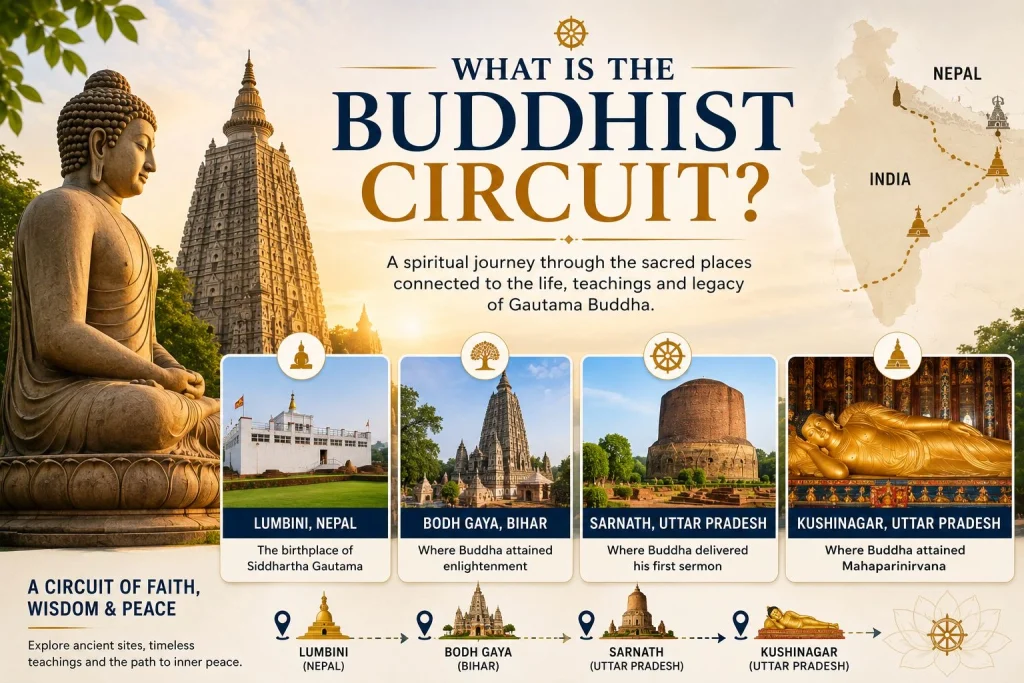
What Is the Buddhist Circuit?
The Buddhist Circuit brings together important places connected to the life, teachings and legacy of Gautama Buddha. It is one of the most meaningful Buddhist pilgrimage tour routes in India and Nepal, attracting Buddhist pilgrims, history lovers, cultural travellers and people looking for a quieter kind of journey.
The four main Buddhist Circuit pilgrimage sites are:
- Lumbini, Nepal: the birthplace of Siddhartha Gautama
- Bodh Gaya, Bihar: where Buddha attained enlightenment
- Sarnath, Uttar Pradesh: where Buddha gave his first sermon
- Kushinagar, Uttar Pradesh: where Buddha attained Mahaparinirvana
A longer Buddhist Circuit itinerary can also include Rajgir, Nalanda, Vaishali, Shravasti and Sankisa. These places help visitors understand not only Buddha’s life, but also the spread of Buddhist learning, monastic life and culture across Asia.
You do not need to be Buddhist to appreciate the journey. What matters is arriving with curiosity, patience and respect for the people who come here to pray.
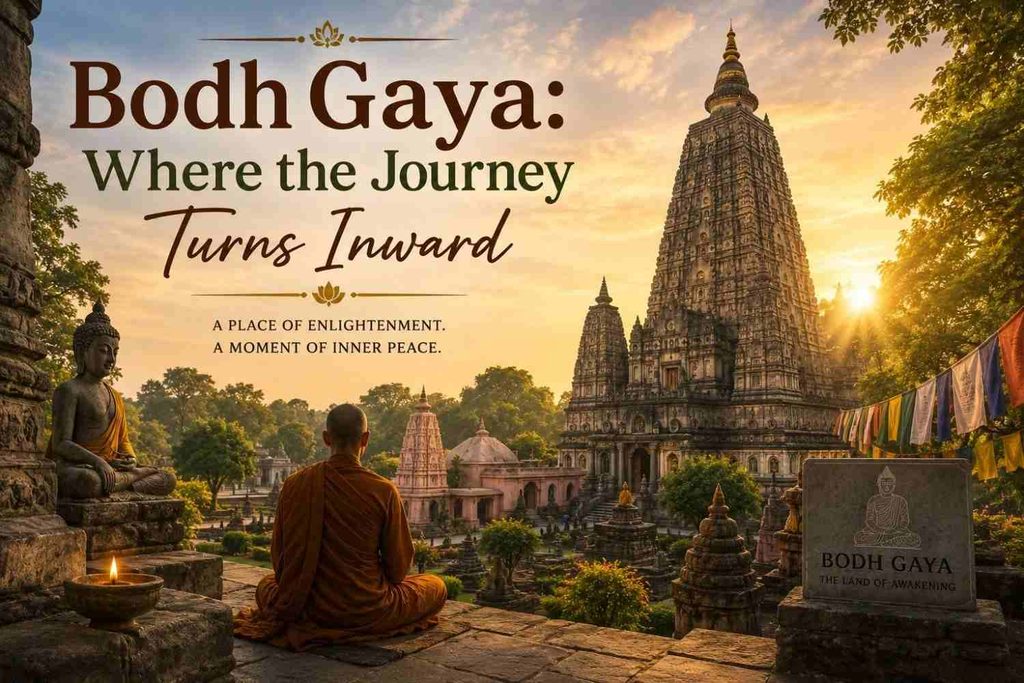
Bodh Gaya: Where the Journey Turns Inward
For many travellers, Bodh Gaya is the emotional centre of the Buddhist Circuit India tour. This is where Siddhartha Gautama is believed to have attained enlightenment beneath the Bodhi Tree and became the Buddha.
The Mahabodhi Temple is the heart of Bodh Gaya. It is one of those places where the atmosphere matters as much as the architecture. Early mornings are especially memorable. The air is cooler, the temple grounds are calmer, and you may hear chants in several languages as pilgrims sit in meditation or walk slowly around the complex.
The Bodhi Tree is the place where many visitors naturally stop. You do not need a special ritual or a perfect photograph. Simply sitting quietly for a few minutes can be enough. Watch the care with which pilgrims offer flowers, light lamps or bow their heads. It is a reminder that this is a living place of faith, not just a famous landmark.
Bodh Gaya is also home to monasteries created by Buddhist communities from Thailand, Tibet, Japan, Bhutan, Myanmar and other countries. Each monastery has its own style, colours and atmosphere. Rather than trying to visit every place in one day, choose a few and spend time properly.
How long should you stay in Bodh Gaya? Plan at least two nights. One full day covers the Mahabodhi Temple and nearby monasteries, but an extra morning allows you to experience the place at a gentler pace.
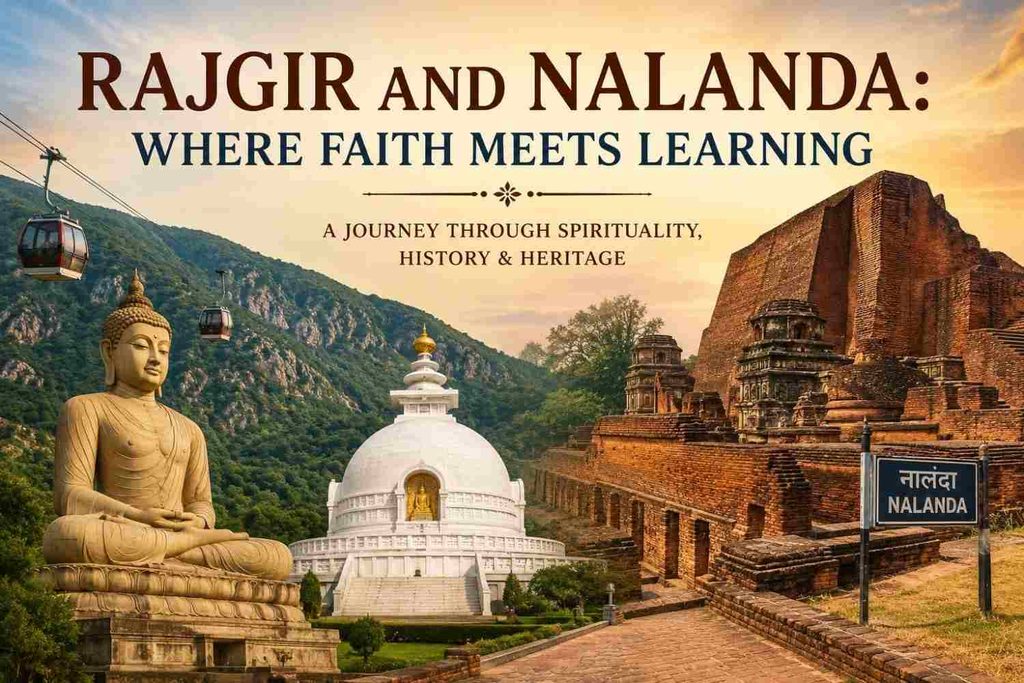
Rajgir and Nalanda: Where Faith Meets Learning
After Bodh Gaya, Rajgir and Nalanda add a different dimension to the journey. They move the experience away from the single moment of enlightenment and towards teaching, study and the growth of Buddhist thought.
Rajgir is surrounded by hills, giving it a completely different feel from the flatter landscapes of Bihar. It is associated with many important events in Buddha’s life. Vulture’s Peak, also known as Gridhakuta Hill, is traditionally believed to be a place where Buddha gave several teachings.
Rajgir invites you to slow down. The hills, open views and quieter surroundings offer a welcome change after busier temple towns. It is a good place to remember that the Buddhist Circuit is not only about monuments. It is also about landscape, memory and the spaces where people gathered to listen and learn.
Nearby Nalanda is one of the most important stops for travellers interested in history. The ancient Nalanda Mahavihara was once a great centre of learning. Students and scholars came from different parts of Asia to study Buddhist philosophy, medicine, language, logic and other subjects.
Walking through the ruins of Nalanda is a powerful experience. The old brick structures may seem quiet today, but they represent a time when this was one of the world’s leading centres of education. Take your time here. Read the signs, listen to a guide if possible, and imagine the conversations that once filled these courtyards.
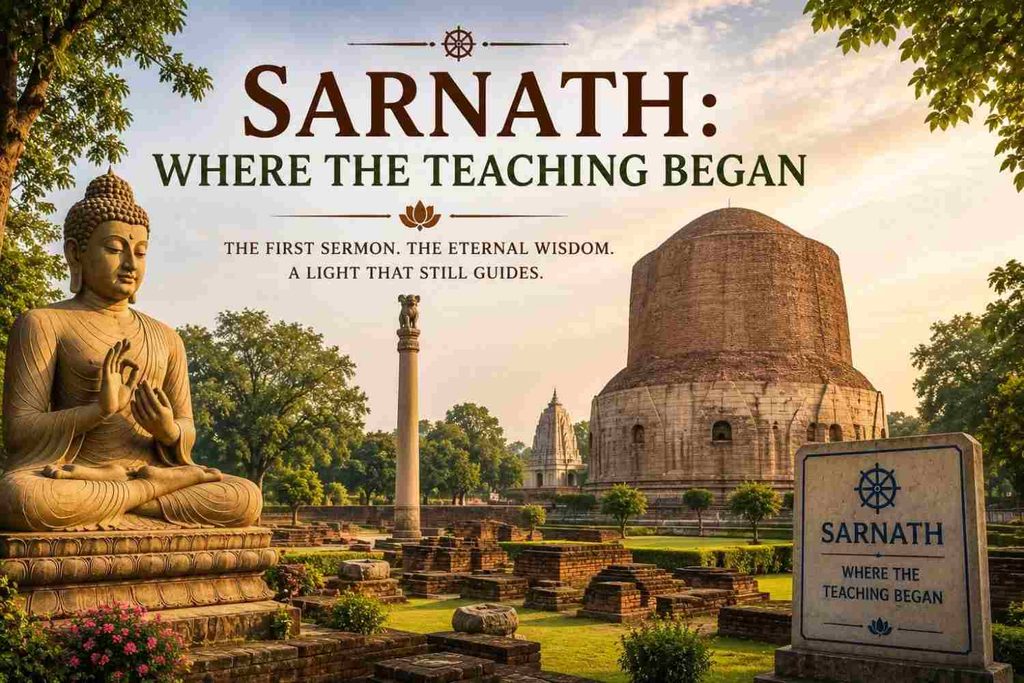
Sarnath: Where the Teaching Began
Sarnath lies close to Varanasi, but the mood is very different. Varanasi is energetic, crowded and full of movement. Sarnath feels calmer and more open.
This is where Buddha gave his first sermon after enlightenment. It was here that he shared the teaching of the Dharma and began forming the Sangha, the community of followers.
The Dhamek Stupa is the main landmark. It stands quietly in the archaeological area, surrounded by lawns, ruins and pathways. Pilgrims from many countries walk around it in prayer, often carrying flowers or prayer beads.
Sarnath is not a place to hurry through. Walk slowly, sit for a while, and notice the atmosphere around you. If Bodh Gaya represents personal awakening, Sarnath represents the next step: sharing understanding with others.
Can Sarnath be visited in one day? Yes. Many travellers visit Sarnath as a day trip from Varanasi. However, staying nearby or allowing a relaxed half-day visit makes the experience more peaceful.
Since most Buddhist Circuit itineraries route through Varanasi on the way to or from Sarnath, it’s worth building in a day for the city itself. A short list of things to do in Varanasi:
- Take an early-morning boat ride on the Ganges to watch the ghats wake up
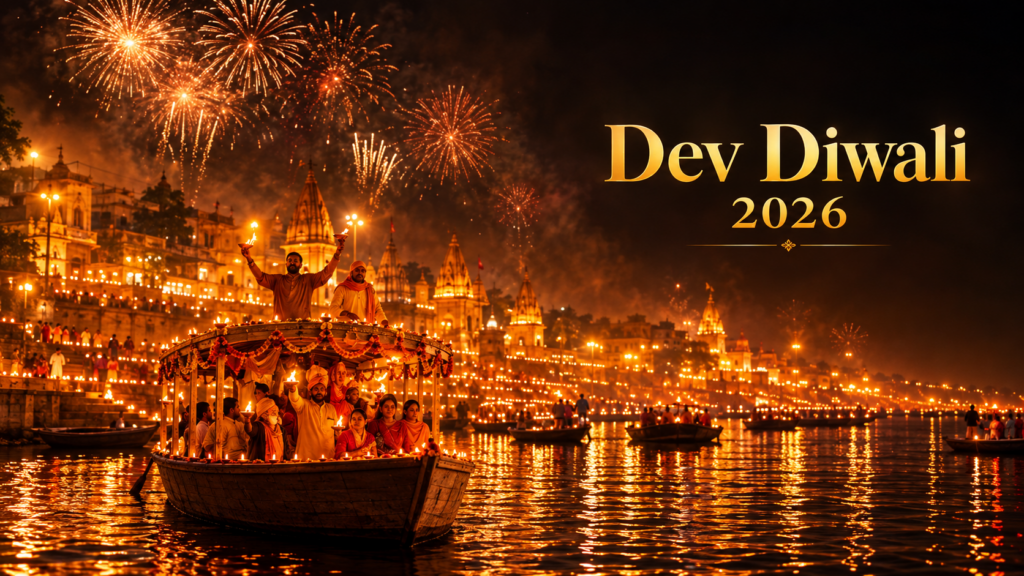
- Attend the Ganga Aarti ceremony at Dashashwamedh Ghat in the evening
- Walk through the old lanes around Vishwanath Gali
- Visit the Kashi Vishwanath Temple
- Explore Sarnath’s Dhamek Stupa and archaeological museum as a half-day add-on
- Try a Banarasi breakfast of kachori-sabzi or jalebi near the ghats
Direct answer: the top three are a sunrise boat ride on the Ganges, the evening Ganga Aarti, and a half-day visit to Sarnath’s Buddhist sites most travellers manage all three in a single overnight stop.
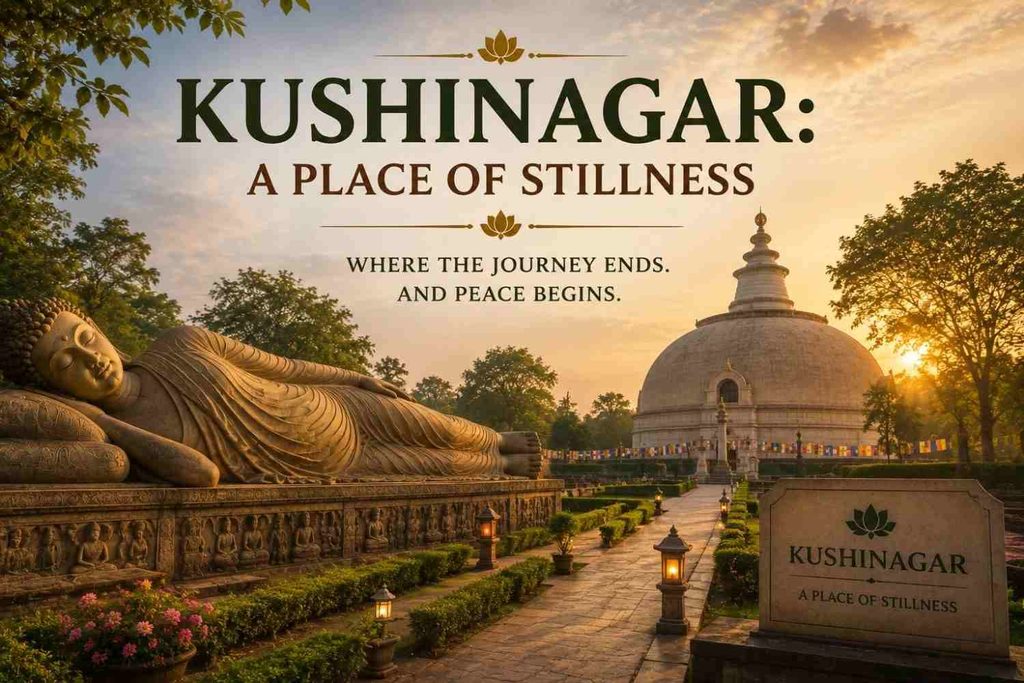
Kushinagar: A Place of Stillness
Kushinagar is one of the most reflective destinations on this route. It is associated with Buddha’s Mahaparinirvana, the final passing away.
The Mahaparinirvana Temple houses a reclining Buddha statue and is the main place of worship for visitors. Nearby, Ramabhar Stupa is traditionally associated with Buddha’s cremation.
Kushinagar does not have the busy energy of Bodh Gaya or Varanasi. It is quieter, and that quietness is part of what makes it important. Many visitors find themselves spending more time in silence here than they expected.
This is a place to put your phone away for a while. Sit under a tree. Walk slowly through the temple grounds. Let the visit be simple.
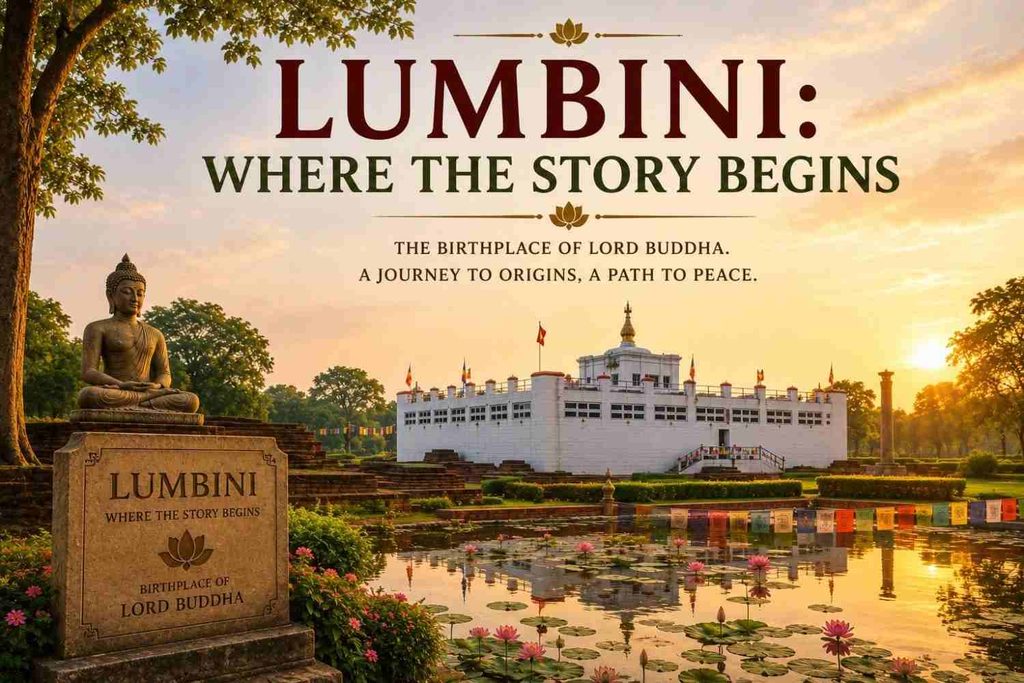
Lumbini: Where the Story Begins
Lumbini, in Nepal, is the birthplace of Siddhartha Gautama. It is one of the four most important pilgrimage sites and a natural highlight of any Buddhist Circuit India and Nepal tour package.
The Maya Devi Temple is the central sacred site. Nearby are the Ashokan Pillar, ancient ruins, prayer flags and peaceful gardens. The wider Lumbini area also includes monasteries built by Buddhist communities from many countries.
You can walk, cycle or use local transport to explore the monastic zones. The Thai, Tibetan, Chinese, Myanmar, Korean and other monasteries reflect how Buddhism travelled across borders while remaining connected to this birthplace.
Lumbini feels open and spacious. It is best experienced in the early morning or late afternoon, when the heat is lower and the atmosphere is quieter.
How much time do you need in Lumbini? Stay for at least one night. Two nights are even better if you want time to visit the Maya Devi Temple, explore monasteries and avoid turning the Nepal visit into a rushed border crossing.
Do You Know About Muktinath Temple in Nepal?
Once you’re already in Nepal for Lumbini, some travellers choose to extend the trip to Muktinath Temple in Nepal, one of the holiest shrines for both Hindus and Buddhists, located high in the Mustang region near the Annapurna range. Muktinath is not part of the traditional Buddhist Circuit and sits several days’ travel from Lumbini by road or a short domestic flight plus drive from Pokhara, so it’s best treated as a separate add-on rather than a stop on the same itinerary.
Direct answer: It is a sacred pilgrimage site in Nepal’s Mustang district, revered by Hindus as a Vishnu shrine and by Buddhists as one of the 24 Tantric places it’s usually visited as an extension trip via Pokhara, not as part of the main Buddhist Circuit route.
How to Travel the Buddhist Circuit?
The Buddhist Circuit covers several destinations across India and Nepal. Although the route looks simple on a map, travel times can be longer than expected because of road conditions, traffic, rail connections and hotel locations.
For first-time visitors, travelling by private car with driver for Buddhist Circuit tour is usually the easiest option. It allows you to move between destinations at your own pace, stop for meals or rest breaks, and avoid the stress of changing local transport with luggage. Many pilgrims booking a Buddhist Circuit tour from Delhi choose this option specifically because it removes the guesswork of coordinating multiple local transfers across two countries.
| Travel Option | Best For | What to Expect |
|---|---|---|
| Private car with driver | Couples, solo travellers and small families | Flexible, comfortable and useful for multi-city travel |
| Tempo Traveller | Families, senior pilgrims and groups | Best for travelling together with luggage and fewer vehicle changes |
| Train plus local taxi | Budget-conscious travellers | Can reduce costs but requires more planning and extra transfer time |
| Guided Buddhist Circuit tour | First-time pilgrims and international visitors | Convenient when hotels, transport and route planning are arranged together |
| Local buses and shared transport | Experienced budget travellers | Low-cost but less comfortable for a multi-stop pilgrimage route |
For families and groups, a tempo traveller can be more convenient than booking several taxis. For couples or small groups, a private car allows more flexibility, especially when covering Bodh Gaya, Rajgir, Nalanda, Kushinagar and Lumbini in one journey.
Even larger groups, or those who want extra comfort on the longer Bihar–UP–Nepal stretches, sometimes step up to a Force Urbania van on rent in Delhi instead, which offers a bit more cabin space and legroom for the same multi-day route.
Suggested 10-Day Buddhist Circuit Itinerary
| Day | Route and Stay | Main Experience |
|---|---|---|
| Day 1 | Arrive in Bodh Gaya | Check in, rest and visit the Mahabodhi Temple if time permits |
| Day 2 | Bodh Gaya | Bodhi Tree, Mahabodhi Temple and international monasteries |
| Day 3 | Bodh Gaya to Rajgir | Vulture’s Peak and Buddhist heritage sites |
| Day 4 | Rajgir to Nalanda | Nalanda ruins, museum and ancient learning sites |
| Day 5 | Travel to Sarnath or Varanasi | Rest after travel and prepare for local sightseeing |
| Day 6 | Sarnath and Varanasi | Dhamek Stupa, monasteries and time in Varanasi |
| Day 7 | Travel to Kushinagar | Mahaparinirvana Temple and Ramabhar Stupa |
| Day 8 | Kushinagar to Lumbini | Road journey, border formalities and check-in |
| Day 9 | Lumbini | Maya Devi Temple, Ashokan Pillar and monastic zone |
| Day 10 | Departure or return journey | Keep the day flexible for travel connections |
This 10-day Buddhist Circuit itinerary is suitable for travellers who want to cover the main Buddhist pilgrimage sites without feeling rushed. If you are travelling with senior citizens, children or a large group, add one or two extra days. If you’d rather not plan each transfer yourself, a Buddhist Circuit tour package with car rental can handle the routing, driver and vehicle end to end.
Practical Tips Before You Go
Wear comfortable footwear, because temple complexes and archaeological sites involve plenty of walking. Dress modestly, covering shoulders and knees, and keep a light scarf or shawl with you for temple visits.
Remove footwear where required, speak softly inside prayer areas, and ask before taking photographs of monks, pilgrims or ceremonies. These are sacred spaces, so it is important to observe local customs.
Carry drinking water, basic medicines, a power bank, copies of travel documents and some patience for road journeys. It is better to keep arrival days light rather than planning too much after a long transfer.
If your trip includes Lumbini, check current India–Nepal border and travel requirements before departure. Rules may change, so always confirm the latest information through official channels.
Suggested Read: 10 Things to Know Before Booking a Tempo Traveller in Delhi
The Journey Stays With You
The Buddhist Circuit is not only about seeing where Buddha was born, awakened, taught and passed into Mahaparinirvana. It is also about noticing what happens when you step away from the usual rush of travel.
You may remember the sound of chanting at Bodh Gaya before sunrise. You may remember the quiet brick paths of Nalanda, the open space around the stupas of Sarnath, or the gentle stillness of Kushinagar. You may remember Lumbini not for one monument, but for the feeling of walking through a place where pilgrims from many countries come with the same sense of reverence.
Plan the route carefully, but do not plan every moment. Leave room for a slower morning, an unplanned conversation, a quiet monastery visit or simply a few minutes without a camera in your hand.
That is often where the real journey begins. Whether you organise your own transport or book a complete guided package, what matters most is arriving with the time and openness to let the journey unfold at its own pace.
Frequently Asked Questions About Buddhist Circuit Tour from Delhi
What is the Buddhist Circuit? The Buddhist Circuit is a pilgrimage route covering important places connected with the life of Gautama Buddha. The main sites include Lumbini, Bodh Gaya, Sarnath and Kushinagar. Many travellers also include Rajgir, Nalanda, Vaishali, Shravasti and Kapilavastu in a longer Buddhist pilgrimage tour.
How many days are needed for a Buddhist Circuit tour from Delhi? A comfortable Buddhist Circuit tour from Delhi usually takes 8 to 10 days. This allows time for Bodh Gaya, Rajgir, Nalanda, Sarnath, Kushinagar and Lumbini without rushing. If you want to include additional Buddhist sites or prefer a slower journey with senior citizens, plan for 12 to 14 days.
Which places are included in a Buddhist Circuit itinerary? A standard Buddhist Circuit itinerary usually includes:
- Bodh Gaya, where Buddha attained enlightenment
- Rajgir, associated with many of Buddha’s teachings
- Nalanda, home to the ruins of the ancient Buddhist university
- Sarnath, where Buddha gave his first sermon
- Kushinagar, associated with Mahaparinirvana
- Lumbini, Nepal, the birthplace of Siddhartha Gautama
Depending on available time, you can also include Vaishali, Shravasti, Sankisa and Kapilavastu.
Can I travel from Delhi to Bodh Gaya by Tempo Traveller? Yes. A Tempo Traveller from Delhi to Bodh Gaya is a practical option for families, friends and Buddhist pilgrimage groups. It gives you the flexibility to choose your departure time, make rest or meal stops, carry luggage comfortably and continue the journey to Rajgir, Nalanda, Sarnath, Kushinagar and Lumbini.
Which Tempo Traveller is suitable for a Buddhist pilgrimage group? The best vehicle depends on the number of travellers and the amount of luggage:
- A 9 or 12 seater Tempo Traveller is suitable for small families and groups.
- A 16 seater Tempo Traveller is a good option for medium-size pilgrimage groups.
- A 20 or 26 seater Tempo Traveller works well for larger Buddhist groups, religious communities and group tours.
- A Maharaja Tempo Traveller or Force Urbania is suitable for groups seeking extra comfort on long road journeys.
Delhi Tempo Travels offers tempo traveller options in 9, 12, 16, 18, 20 and 26 seater categories, along with Maharaja Tempo Traveller and Force Urbania rental options.
Is a Tempo Traveller better than travelling by train for the Buddhist Circuit? For a multi-city Buddhist Circuit tour, a Tempo Traveller is often more convenient for groups. Train travel can be useful for budget-conscious travellers, but it usually involves station transfers, local taxis, separate luggage handling and fixed schedules. A private Tempo Traveller allows the group to remain together and gives more flexibility for sightseeing, hotel check-ins, food breaks and route changes. It is especially useful when travelling with senior citizens, children or several family members.
Can a Buddhist Circuit tour include Lumbini in Nepal? Yes. Lumbini is one of the four principal Buddhist pilgrimage sites and is an important part of a Buddhist Circuit India and Nepal itinerary. Since Lumbini is in Nepal, travellers should check current passport, visa, border-crossing and vehicle-permit requirements before planning the journey. It is best to keep sufficient time for border formalities and avoid scheduling a tight connection on the same day.
What is the best time to visit the Buddhist Circuit? The cooler months are generally more comfortable for visiting temples, monasteries, archaeological sites and outdoor pilgrimage areas. Morning visits are especially pleasant at places such as Bodh Gaya, Sarnath and Lumbini. Major Buddhist festivals and holiday periods can bring larger pilgrim groups, so book hotels and transport early if you are travelling during busy dates.
Is the Buddhist Circuit suitable for senior citizens? Yes, but the itinerary should be planned at a comfortable pace. Senior travellers benefit from a private vehicle, comfortable seating, fewer hotel changes, regular rest stops and at least one flexible day in the route. A Tempo Traveller for a Buddhist Circuit tour can be useful because it allows the group to travel together without repeatedly changing taxis, carrying luggage between stations or managing crowded local transport.
What should I wear while visiting Buddhist temples and monasteries? Wear modest and comfortable clothing that covers your shoulders and knees. Carry a scarf or shawl for temple visits. You may need to remove your shoes before entering some sacred areas. Speak quietly inside prayer spaces, avoid taking photographs during rituals unless permitted, and ask before photographing monks, pilgrims or local worshippers.
Can Delhi Tempo Travels provide transport for a customised Buddhist Circuit itinerary? Yes. A Buddhist Circuit tour can be customised based on your group size, number of travel days, pickup location, hotel preferences and the destinations you want to include. You can choose a Tempo Traveller according to the size of your family, friend group or pilgrimage group. For an accurate quote, share your travel dates, total passengers, pickup location, planned route and any special requirements such as extra luggage space or premium seating. Delhi Tempo Travels offers outstation tempo traveller rental and group-travel options from Delhi NCR.
How do I book a Tempo Traveller for a Buddhist Circuit tour from Delhi? Booking is a simple four-step process:
- Share your trip details pickup location, number of passengers, travel dates and the destinations you want to cover.
- Get a quote a full cost breakdown covering the per-km rate, driver charges, state taxes and tolls, with no hidden additions.
- Confirm with an advance payment to lock in your vehicle and travel dates.
- Travel with confidence you’ll receive your driver’s details and vehicle information ahead of the journey, with support available throughout the trip.
To book a Tempo Traveller in Delhi, share your preferred travel date, number of passengers, pickup point in Delhi NCR, full Buddhist Circuit itinerary and return date. The travel team can then suggest a suitable vehicle category and provide a customised quote.
Before confirming, ask for a clear breakdown of the vehicle type, daily or kilometre-based charges, driver allowance, tolls, parking, state taxes, border-related costs, accommodation needs for the driver and any other applicable charges.